Every instrument used in surgery has to be cleaned, inspected, and sterilized before it goes back to the operating room. Central processing technicians handle that work. When they do it well, contaminated equipment never reaches a patient. The job is technical, and it leaves little room for shortcuts.
Formal training is how most people prepare. A good program covers infection control, medical instrumentation, sterilization methods, and the way a central sterile department runs day to day. Anyone looking for central processing technician certification in Southfield should find structured programs that pair classroom knowledge with hands-on practice, so you are ready to start working in the field.
What Does a Central Processing Technician Do?
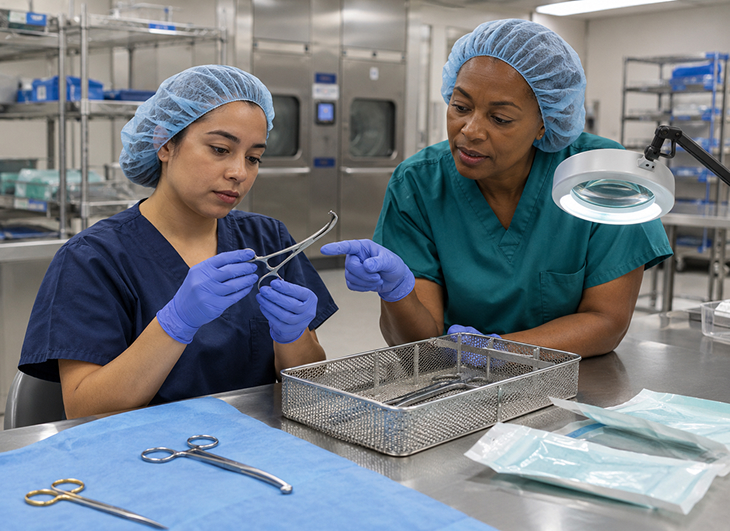
Central processing technicians process reusable medical instruments and equipment. Their job consists of cleaning, checking, sterilizing, and organizing instruments.
At each stage of work, procedures have been established. Medical instruments should be inspected beforehand, as a missed procedure may risk patients’ lives and delay surgical operations.
Most of the technicians work in hospitals, clinics, and other medical institutions. Their work mostly happens behind the scenes, but surgical staff always rely on correctly processed instruments every day.
Why Pursue Central Processing Technician Training?
1. Develop Specialized Healthcare Skills
To perform the job successfully, it is advised that one knows a fair share about medical terminology, human anatomy, microbiology, and clinical tools. Students are instructed on these subjects as part of their education in sterile processing procedures.
The course includes studies of anatomy and physiology, sterilizing machines, sanitation, and sterilization processes. Such knowledge enables students to learn the ins and outs of the job and understand the demands for the position.
2. Learn Practical Sterilization and Infection Control Procedures
Cleaning alone does not guarantee the safety of an instrument for reuse. Medical instruments must be processed in accordance with their type and the relevant standards.
The students study how microorganisms are transferred, how contamination happens, and how decontamination and sterilization methods help minimize infection risks. They also learn how to ensure safe processing conditions.
These concepts are reinforced at the practical training stage where the students perform each process and learn the dangers for the patient in case a step is not done or is done incorrectly.
3. Gain Experience With Medical Instruments and Equipment
The central processing technologists employ different types of devices that have different structures, functions, and processing needs. They must categorize items, check their condition, and process them in compliance with the established standards.
The central processing technologists employ different types of devices that have different structures, functions, and processing needs. They must categorize items, check their condition, and process them in compliance with the established standards.
The importance of accuracy never diminishes. The presence of defective equipment, an incomplete set of equipment, and incorrect processing can result in huge problems for the medical staff. If an object needs a more thorough inspection, the technologist should stop for a moment to take a closer look rather than send the instrument away.
How Does Certification Preparation Help?
Being certified as a Central Processing Technician in Southfield is not merely based on the completion of training programs. Certification indicates the eligible services as per criteria selected by the certified organizations. An institution may provide a completion certificate.
Healthcare Sterile Processing Association is a body granting CRCST certification. The exam assesses skills of candidates regarding sterile processing procedures and related responsibilities.
To acquire credentials, one must accumulate 400 hours of relevant practical experience through the HSPA certification program. A candidate can take up the test without completing all practical hours yet still get a conditional certification.
Exam preparation leads students to review important concepts for their certification acquisition.
What Career Opportunities Does the Training Support?
Central processing training can lead to entry-level positions focused on cleaning, sterilizing, inspecting, and distributing reusable medical equipment.
Possible workplaces include:
- Hospitals and central sterile services departments
- Outpatient surgery centers
- Outpatient health care centers
- Other health care facilities with sterile processing operations
Job titles vary. Employers may use central processing technician, sterile processing technician, or central service technician. Duties and hiring requirements also change from one facility to the next.
No training program can guarantee a job. Students should look at local job boards to see which qualifications, experience, and certifications employers ask for.
Conclusion
A career in sterile processing depends on technical instruction and a solid grasp of workplace procedures. Good training covers infection control, instrument handling, sterilization, and practical application, and students should look for a program that does.
Abcott Institute offers a Central Processing Technician program built around these areas. It includes laboratory instruction, clinical experience, and CRCST exam preparation. Prospective students should review the curriculum and speak with our admissions team about current program requirements, costs, and training arrangements.
Frequently Asked Questions
1. What subjects are covered in central processing technician training?
The curriculum includes medical terminology, anatomy and physiology, microbiology,
instrumentation, sterilization, decontamination, and central processing procedures.
2. Does completing the program automatically make me CRCST certified?
No. Completing the school program and earning the CRCST credential are separate steps.
Candidates must satisfy HSPA's eligibility requirements and pass its certification examination.
3. Where can central processing technicians work?
They may find opportunities in hospitals, surgical centers, outpatient facilities, and other
healthcare settings that process reusable medical instruments and equipment.
4. How long does Abcott Institute's Central Processing Technician program take?
It takes a typical duration of 36 weeks. Clinical hours may vary, so contact admissions to
confirm the current schedule and expected completion time.