An operating room works on preparation that starts long before the first incision. Instruments have to be ready, equipment has to be checked, and the sterile field has to stay protected from start to finish. Surgical technicians keep those conditions in place while they support surgeons and the rest of the surgical team.
Training for the role pairs medical knowledge with practical skill. Students learn surgical terminology, instrument handling, infection prevention, patient safety, and operating room procedures.
They also build the concentration and communication habits a setting demands when small mistakes can carry serious consequences.
For those exploring surgical technician programs in Detroit, knowing these skills clarifies what the training involves and how it prepares students for surgical care.
1. Medical Terminology and Human Anatomy
Surgical technicians are required to have knowledge of the terminology used in operating rooms. Through training, students study certain abbreviations, basic anatomy, body systems, etc. This knowledge is necessary to ensure effective communication in the clinical environment.
The subject area is anatomy and physiology, which refers to the study of the human body's structure and function. In particular, students will see how organs work and how certain conditions affect these organs. The courses provide important background information in terms of the role of surgical technicians in the field of patient care.
2. Surgical Instruments and Equipment Handling
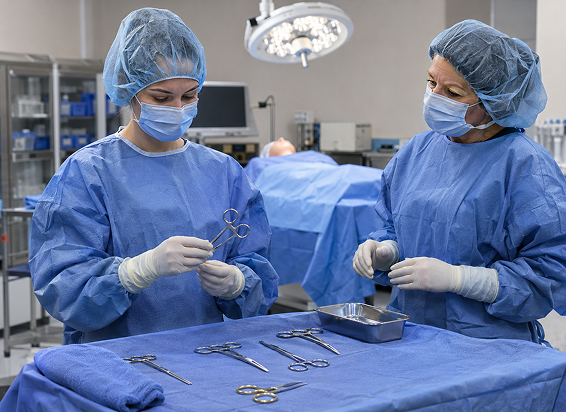
Allowing Surgical Technicians some minimum training puts them on their way to acquiring the requisite skills. They become familiar with various kinds of instruments used in different procedures and how the latter are arranged and prepared.
Students will learn:
- Identification of simple surgical instruments and their functions
- Consideration of those instruments and any supplies that should be opened on the table before beginning the procedure
- Checking the equipment and ensuring all the necessary items are in attendance
- Passing the instruments when asked by the members of the surgical team
- Counting instruments and supplies by established methods
All this is heavily rooted in accuracy; that is, the instrument should be ready for use as soon as the surgical team asks for it, and counting should be done in an infallible way so as not to jeopardize the safety of the patient.
3. Sterilization and Infection Prevention
Keeping the place sterile is part of the job. Patients can be infected from contamination, so it is important that students are taught how to handle sterile supplies and keep the protection of the surgical field.
Training includes microorganisms, disinfection, decontamination, methods of sterilization, and aseptic technique. Students learn the difference between a clean item and an item suitable for a sterile surgical environment.
Practical teaching accentuates the principles. Students are taught to look for possible deviations from sterile technique, to adhere to protocols and to respond appropriately when contamination is suspected. Rules aren’t enough. These habits take consistent work.
4. Operating Room Preparation and Surgical Procedures
The entirety of a surgical procedure encompasses everything which happens before it actually begins. This implies that the area has to be set up, supplies gathered, materials checked, and sterile equipment delivered prior to the patient's arrival.
Educational establishments located in Detroit offer surgical technology courses that teach students all these preoperative steps. They learn various surgical procedures and their specific steps including preparation activities.
Moreover, students get acquainted with surgical draping practices, standard operating room techniques, as well as technician's role in each step of the operation.
5. Patient Safety and Professional Responsibilities
In a surgical room the safety of the patient is an important aspect of the everyday operations. A technician goes through all protocols, records the proper counts of the instruments, and maintains the concept of sterile field.
Training also includes the principles of how to place the patient correctly, how to handle the proper equipment in a safe manner, and how to prevent the environmental hazards. These topics provide an understanding why the technicians observe protocols and operate within their competency.
6. Communication and Teamwork
An operating room brings together professionals with distinct responsibilities. Surgical technicians must be able to communicate well with surgeons, nurses and other team members, while keeping their eyes on the procedure.
Training teaches good communication, teamwork and professional behavior. Students learn to listen closely, follow directions, and respond quickly when the team asks for instruments or supplies.
The job is also about composure. Procedures can be long and difficult and technicians may have to maintain concentration for long periods. A systematic approach to each task will prevent unnecessary mistakes and help coordinate the whole team.
Start Your Surgical Technician Training in Detroit
Surgical technician training develops technical knowledge, practical ability and professional discipline together. Instrument handling, sterile technique, patient safety and straightforward communication all make up the work done in an operating room.
Located in Southfield, Abcott Institute offers a Surgical Technician program that prepares students for duties in the operating room. Our curriculum includes didactic courses, laboratory procedures, clinical rotations and preparation for the national certification examination. Students who are interested are welcome to call us at (248) 440-6020 to learn more about admission requirements, training schedules and certification eligibility.
Frequently Asked Questions
1. What do students learn in surgical technician programs in Detroit?
Common course topics include medical terminology, anatomy and physiology, surgical
procedures,
microbiology, pharmacology, instrumentation and sterilization methods.
2. Are there hands-on practices in surgical technician programs?
Mostly, yes. They combine classroom instruction with laboratory work and clinical
rotations. However, you should check the exact training arrangements before signing up.
3. How long does it take to become a surgical technician?
It is contingent upon the school and the clinical needs. Generally, it takes 13–15 months.
Completion time, however, may be influenced by clinical scheduling.
4. What skills should a surgical technician have?
Attention to detail, instrument recognition, sterile technique, communication, teamwork and
the ability to concentrate during procedures all count.