What do you want your next job to look like? For someone considering a career change, that question is not always easy to answer. You may know that you want a more stable career. You may want work that gives you practical skills. Or you are ready to move away from a job that no longer feels right for you.
Healthcare training can be a useful starting point. But choosing a program involves more than finding the closest school or the shortest course. What will you learn? How much practical experience will you get? Does the program prepare you for the requirements of the field?
These questions matter when comparing healthcare career training in Detroit and the surrounding area. So, what should you look for before choosing a career training program?
Start With the Career, Not Just the Program
It is easy to begin with a course title that sounds interesting. A better approach is to start with the job you want.
Think about the type of work you would actually enjoy doing. Would you prefer working directly with patients? Do you like technical tasks? Are you comfortable working in a fast-paced environment?
Your answers can narrow the choices considerably. Before enrolling, consider:
- The type of work involved
- Typical work settings
- Training or certification requirements
- Opportunities for advancement
- The skills employers expect
- Whether the career matches your interests
A program should lead somewhere specific. Knowing that destination makes it easier to judge whether the training is worth your time and money.
Look at What You Will Actually Learn
A program may sound impressive on paper. The more important question is what happens inside the classroom.
Career-focused education should give students knowledge that relates to the work they plan to perform. Depending on the field, that may involve:
- Technical procedures
- Equipment
- Patient care
- Documentation
- Safety practices
- Other job-specific skills
Ask yourself: Will I finish this program knowing more than I knew when I started?
Review the course content carefully. See what areas are taught and what abilities are required of the learner. Try to determine whether classroom learning is linked with hands-on training, if possible. This is especially important for medical field positions. Understanding a process theoretically and actually performing it on a job level are two completely different things.
Check the School's Credentials
The reputation of a school should be taken into consideration, but the qualifications you obtain also need to be considered. Prior to choosing any schools, check if the school and its training program have the necessary licenses and accreditations that may influence the perspective of potential employers.
You can also look at:
- Program approvals and accreditation
- Instructor qualifications
- Program completion requirements
- Student support services
- Career services
- Financial aid options
- Graduation and employment information
A school should be willing to explain these details clearly. If basic questions about the program are difficult to answer, take that as a reason to look more closely.
Ask About Hands-On Experience
Do you think that you would feel prepared to do a job from just attending lectures alone? No.
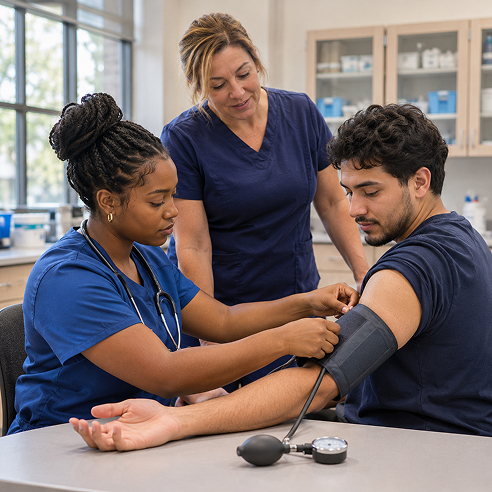
Practical training can play an important role when it comes to vocational education. This will enable students to get acquainted with tools, processes, and the environment.
For training in the health field, practical training can be useful. The students may require getting used to dealing with patients, procedures, equipment, safety measures, and professionalism.
This practical training is no substitute for actual work experience. However, this will definitely prepare the students for the work that lies ahead.
Think About the Instructors
Curriculum defines what is being taught in classes. Instructors define how students perceive this information. Think about their qualifications and work experience in this field. Instructors who know all modern practices of industry can give you much interesting additional information.
You may want to think about your comfort level of asking questions. Career training happens very fast. You should have an ability to turn to instructors for help.
A good learning environment means not just teaching but perceiving information.
Look at the Time and Financial Commitment
Career training is an investment. Before enrolling, make sure you understand what that investment involves.
Ask about tuition, fees, books, equipment, uniforms, examination costs, and other expenses. Some programs may also offer financial aid to eligible students. Time deserves the same attention.
Consider:
- Program length
- Class schedules
- Clinical or practical requirements
- Travel time
- Study requirements outside class
- Your current work or family responsibilities
A program may be excellent but difficult to manage with your existing schedule.
Think Beyond the First Job
Your training should also equip you for much more than just surviving the interview process. Where could your career lead you in the coming years? Is there anything else you can pursue once certified? Can the skills you gain from training lead to another position down the road?
These kinds of questions will be especially useful to consider when comparing healthcare careers, because your entry level training might open up possibilities for more education or training. Your career plan doesn’t have to stretch out over the next twenty years – just the next steps.
Do Some Research Before You Enroll
It is very convenient to conduct comparisons using the internet, but one should not depend solely on the website of the school. Take a look at all of the details regarding the program. Consider the admission requirements. Check out the curriculum. Conduct research on the occupation and the qualifications required by employers. One could also contact an admissions officer.
For example:
- What does a typical week in the program look like?
- How much practical training is included?
- What are the admission requirements?
- What expenses should students expect?
- What support is available during the program?
- What happens after graduation?
The answers can tell you a lot about whether the program fits your goals.
Final Thoughts
Career training becomes simple if one begins from knowing what his goal is in making such a choice. First of all, think about the profession. Then, examine the career training needed for entering such a field. Curriculum, practical experience, faculty, accreditation, tuition fees, schedule, and other aspects should be considered.
For those who are trying to find out more about career training programs in healthcare in Detroit, Abcott Institute provides career training programs in healthcare in Southfield, Michigan, which is close to Detroit. These career training programs include such courses as Practical Nurse, Surgical Technician, and Central Processing Technician Training.
FAQs
1. What should I look for in a career training program?
Look at the curriculum,
practical training, instructors, accreditation, program length, cost, and student support. Make sure the
training matches the requirements of the career you want to pursue.
2. Is healthcare career training a good option for changing careers?
It can be.
Focused training may allow you to develop skills for a new field without following a longer degree path,
depending on the occupation and its requirements.
3. Does healthcare career training include hands-on experience?
It depends on the
program. Programs involving healthcare or technical work may include practical or clinical training. Ask
the school how much hands-on experience is included before enrolling.
4. How do I know which career program is right for me?
Start with the type of work
you want to do. Then compare the education, skills, licensing, work environment, and advancement options
associated with that career.